Main Content
Main content area
The most confident
Creating a masterpiece.
Representative Director Sang-jin Ko Hair Transplant Story
-
01
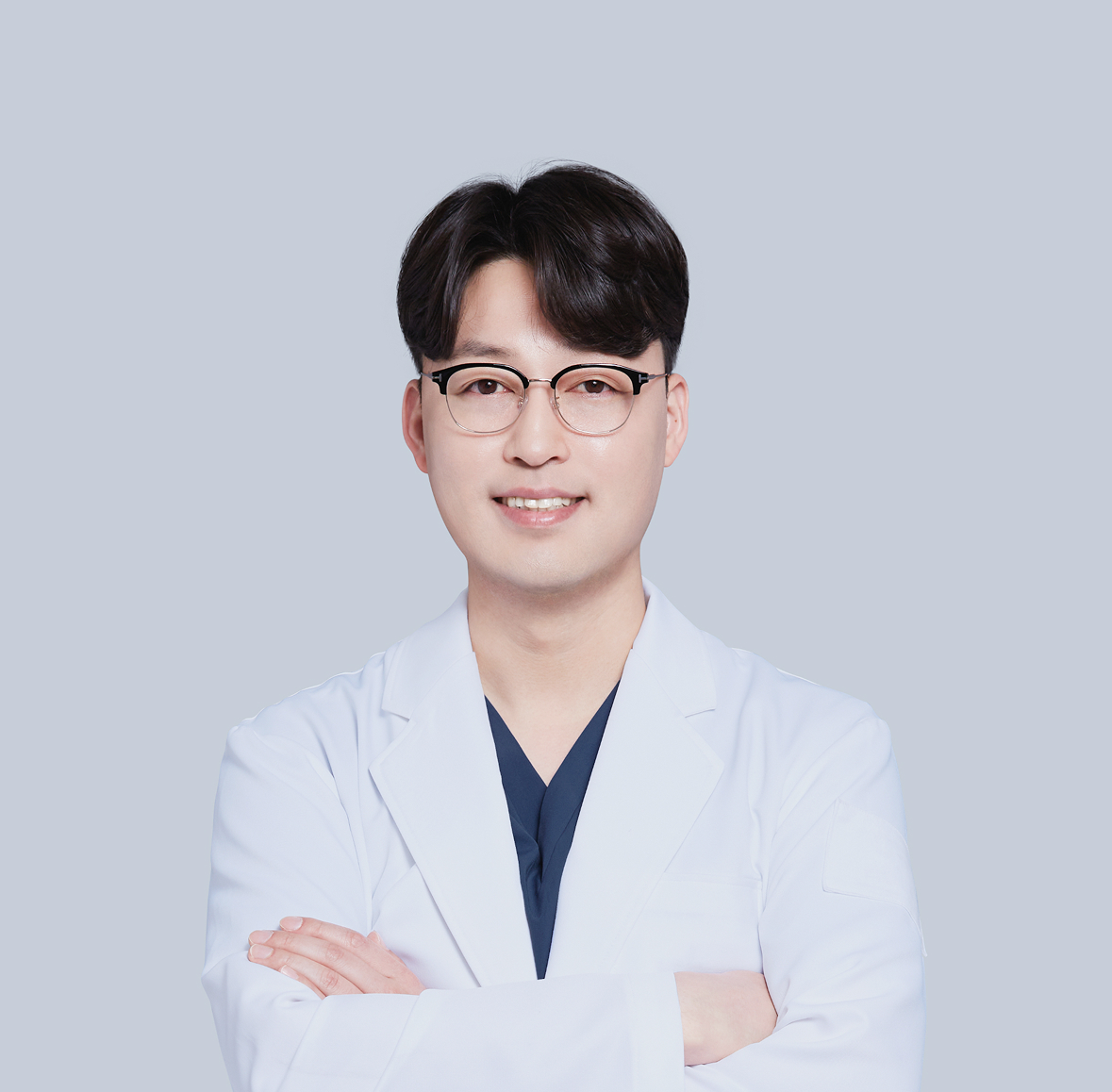
I, who had a lot of interest in the human body,
A late starter after a liver transplant in my 20s
Entering medical school.Since childhood, I was curious about nature and the principles of the world. During my school days when I had to think about my future, how people change and how the human body changes were more important interests. I thought becoming a doctor was the surest way to understand these processes best, but I ended up studying something else.
In my mid-20s, I suddenly underwent a liver transplant for my maternal uncle. After the liver donation surgery, complications that rarely occur in donors arose, and I spent half a year in the hospital. I did a lot of thinking and worrying at that time, and decided to enter medical school at a late age, past my mid-20s. Whether by chance or destiny, I encountered hair transplantation while entering the School of Medicine at Kyungpook National University, which boasts the highest authority in hair transplantation. -
02
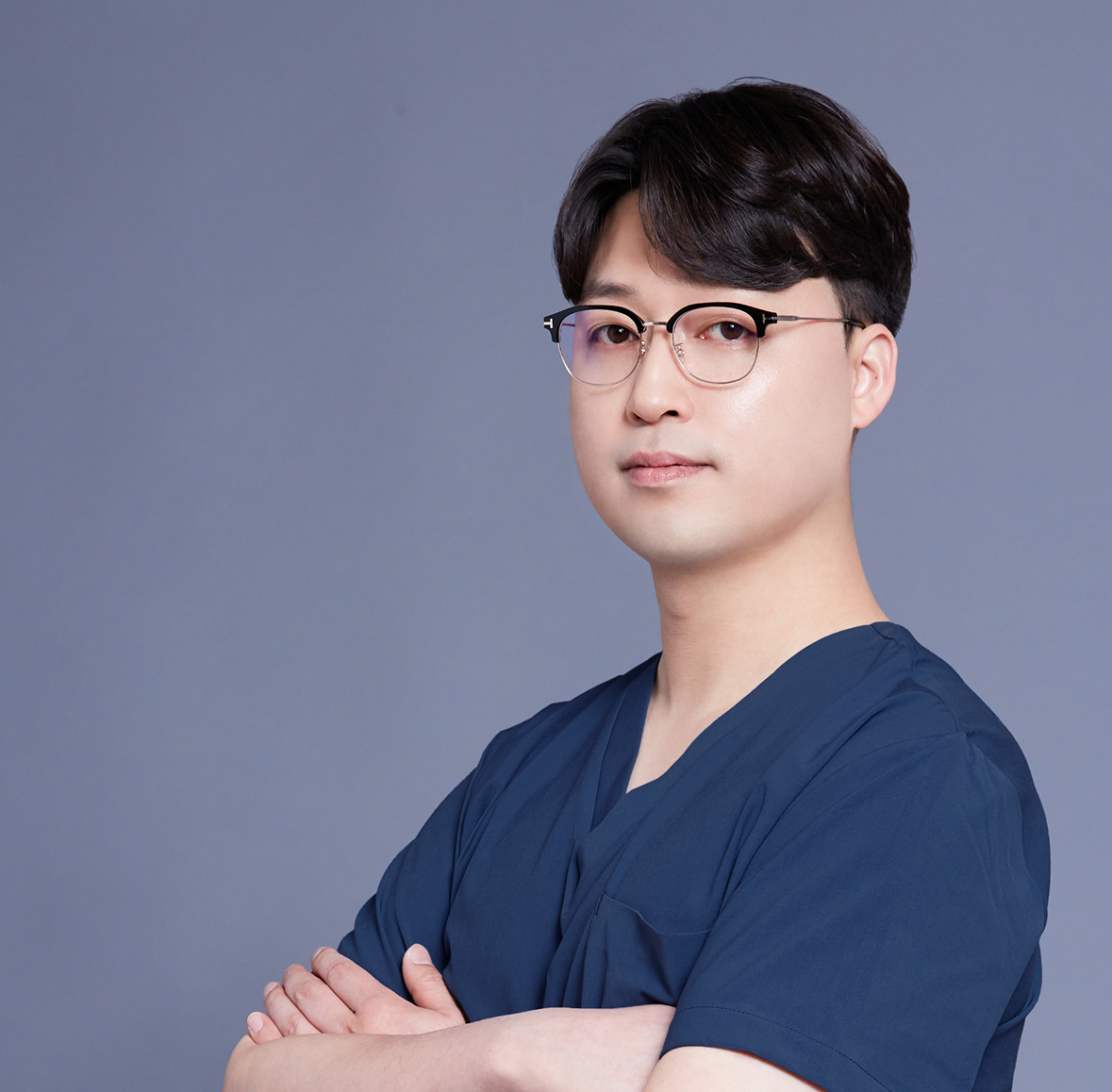
Hair Transplant
Surpassing 5,000 CasesI have spent most of my life as a doctor performing hair transplants. Hair transplantation takes a long time, about a year, to see the results after the procedure. This period, which feels very long to patients wondering about success, is likewise a very long time of waiting for the lead surgeon.
It is a very long time to check if I performed the surgery well or if there are points for improvement. Applying improvements after seeing the 1-year results, waiting for the results again, and repeating this is by no means an easy task.
This is why a hair transplant surgeon needs at least 5 years of experience, no matter how good their dexterity is. The moment I feel the most rewarded is when I see the appearance changed into what the patient wanted and what I wanted.
Especially, the most thrilling moment is when I hear reviews saying that even at the hair salon, they couldn't tell that a hair transplant was done. -
03
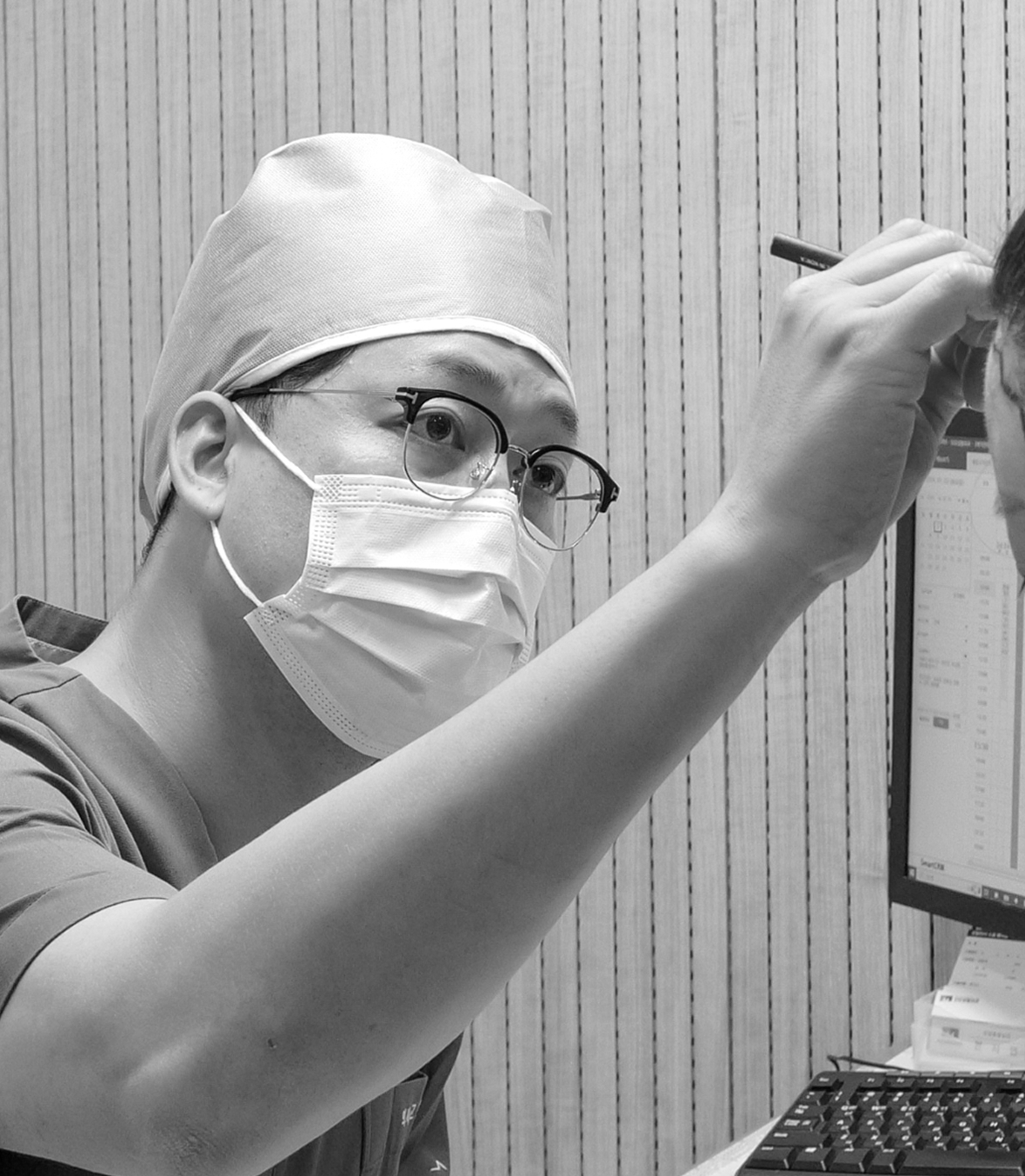
Hair loss, only those who have experienced it
can empathize.In the early days of my hair transplant training, I had a lot of physical and mental stress. Somehow, it felt like I was developing hair loss too, and my hairline density seemed to be decreasing. Without needing to worry, I started taking hair loss medication.
However, even I, who had prescribed hair loss medication countless times, experienced unexpected side effects.
Even thinking back on it now, it was a difficult moment, but it became an experience that allows me to explain in more detail to patients who fear side effects of hair loss medication and to establish future treatment plans. -
04
Hair transplant, success without reason and failure do not exist.
I believe that everything in the world must follow reason.
Hair transplantation also
follows the rule that there is no success or failure without a reason.
If it goes well, there must be a reason that made it go well.
My greatest strength is that I do not settle but continue to research how to do it better. -
05
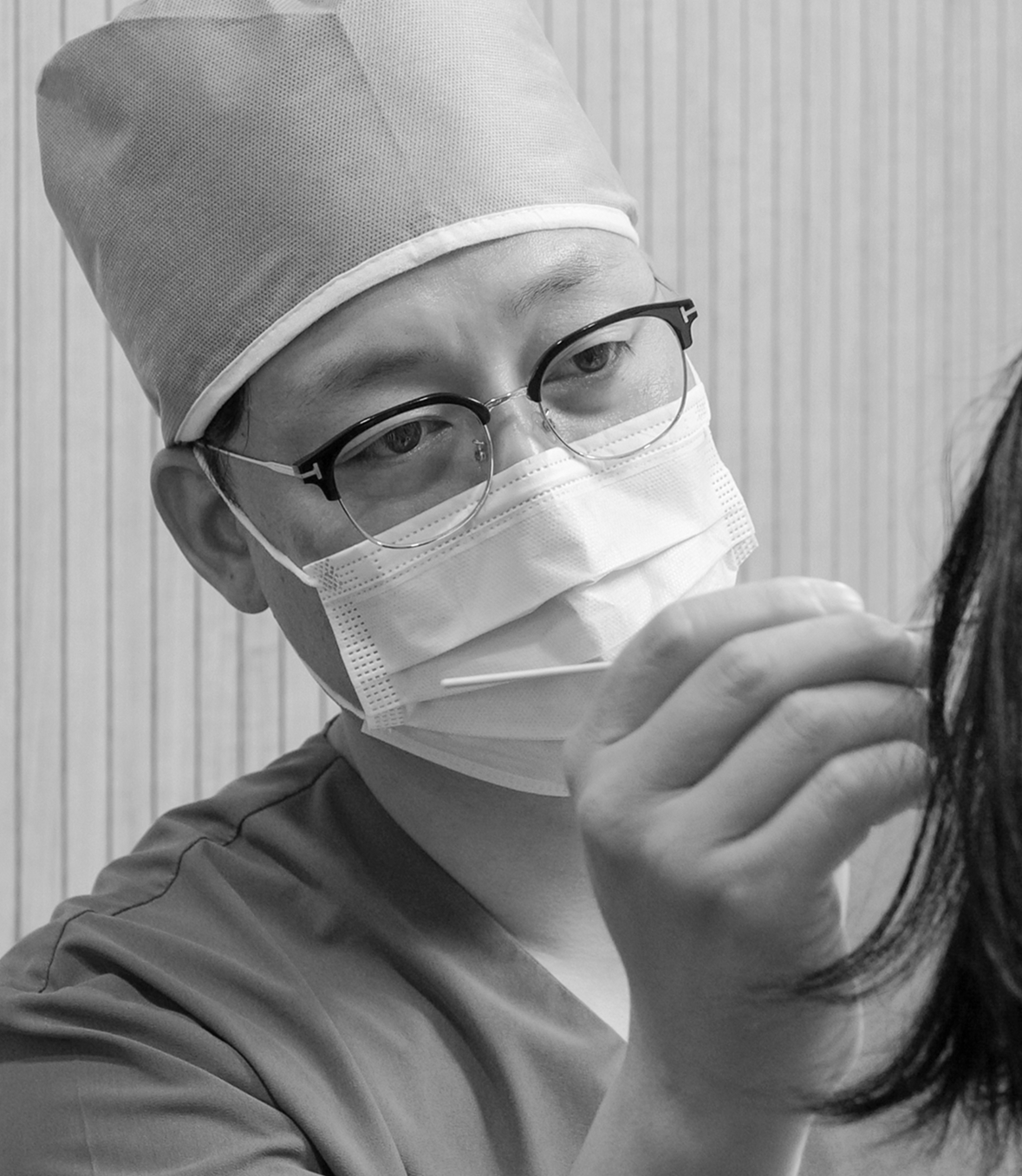
Hair transplantation is a
creating lines with dots,
creating surfaces with lines,
creating curves with straight lines
process.It is similar to the process of creating an artwork, like painting or sculpture. It requires a much more artistic sense than just a series of processes to fill a space.
I find hair transplantation, which is drawing a picture on the face of someone most precious in the world every day, the most fun.
It is also what I am most confident in among the things I know how to do in the world.
I want to be a doctor who can do what I do best for patients for the longest time.


Treating patients like my family I will think of them.
If I treat patients like my family, I will do my best. Patients are family.
Anyone can treat people like family during consultation or treatment. When I educate numerous junior doctors and staff,
what I always say is
'Think of today's patient like your parents.' You must think of the patient like your family to provide good
medical care, and provide good treatment.